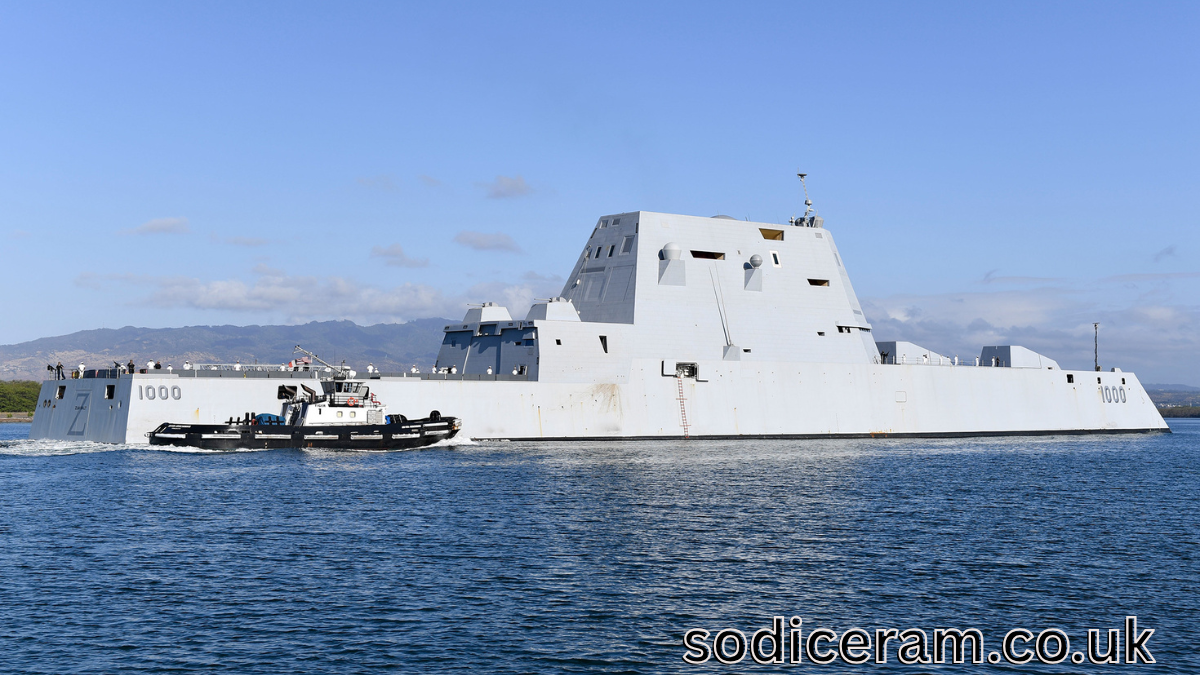
Modern naval warfare has USS Zumwalt changed dramatically over the last few decades. Nations are no longer relying only on large fleets and heavy firepower; instead, they focus on advanced technology, stealth, and precision capabilities. One of the most remarkable examples of this evolution is the USS Zumwalt, a warship that looks more like something from a science fiction movie than a traditional naval vessel. With its unusual shape, cutting-edge electronics, and powerful weapon systems, the ship represents a bold step forward in naval engineering.
The USS Zumwalt is the lead ship of the Zumwalt-class destroyer, a new generation of destroyers built for advanced combat operations. Unlike traditional warships, this destroyer was designed with stealth technology that makes it difficult to detect on radar. Its design, combined with its powerful systems, allows it to perform missions ranging from land attacks to maritime defense. In many ways, it demonstrates how modern warships are becoming smarter, more automated, and far more technologically advanced.
The development of the USS Zumwalt was driven by the need to maintain naval superiority in an increasingly complex world. As military technology evolves, navies require ships that can adapt to new threats, operate in challenging environments, and deliver precise strikes when necessary. The Zumwalt destroyer was created to meet these demands, combining stealth, firepower, and digital warfare systems into one highly sophisticated platform.
This article explores the story behind the USS Zumwalt, its innovative design, powerful weapons, advanced technology, and its role in modern naval strategy. By understanding what makes this destroyer unique, we can better appreciate how it represents the future direction of naval warfare.
The Origin and Development of USS Zumwalt
The idea for the Zumwalt destroyer program began in the late twentieth century when the United States Navy started exploring ways to modernize its fleet. Traditional destroyers were effective, but military planners realized that future conflicts would require ships capable of operating closer to enemy coastlines while remaining difficult to detect. This need led to the development of a new class of stealth warships that could support ground forces and carry out precision strikes.
The ship is named after Elmo Zumwalt, a respected admiral who served as the youngest Chief of Naval Operations in the history of the United States Navy. Admiral Zumwalt was known for his progressive leadership and efforts to modernize the Navy during his time in service. Naming the ship after him was seen as a tribute to his legacy and vision for a technologically advanced naval force.
Construction of the USS Zumwalt began in the early 2010s at a shipyard operated by General Dynamics. Building the ship required advanced engineering techniques and new materials that had never been used on destroyers before. The ship was eventually launched and later commissioned into active service, becoming one of the most technologically sophisticated warships ever built.
Although the original plan was to produce many ships in this class, rising costs and changing strategic priorities led to the construction of only three vessels. Despite the smaller number, the Zumwalt program still plays an important role as a testing platform for new naval technologies that may shape future warships.
Innovative Design and Stealth Technology
One of the first things people notice about the USS Zumwalt is its unusual appearance. Unlike traditional destroyers that have vertical sides and visible structures, the Zumwalt features a “tumblehome” hull design where the sides slope inward toward the deck. This unique shape significantly reduces the ship’s radar signature, making it appear much smaller on radar systems than it actually is.
Stealth was a central goal during the ship’s design process. Engineers used radar-absorbing materials and carefully shaped surfaces to deflect radar waves away from the source. As a result, the destroyer can approach hostile areas with a lower chance of detection compared to older warships. This capability provides a strategic advantage during operations that require surprise or secrecy.
Another major innovation is the ship’s integrated power system. Instead of using separate engines for propulsion and onboard systems, the Zumwalt uses a fully electric power system that distributes energy throughout the ship. This design allows the vessel to generate massive amounts of electrical power, which can support advanced weapons, sensors, and future technologies.
The integrated system also improves efficiency and flexibility. Because power can be redirected where it is needed most, the ship can adapt to different operational requirements. Whether powering propulsion systems, advanced radar equipment, or new experimental weapons, the Zumwalt’s electrical architecture represents a major leap forward in naval engineering.
Weapons and Combat Capabilities
Despite its stealthy appearance, the USS Zumwalt is heavily armed. One of its most distinctive features is the Advanced Gun System, designed to fire long-range precision shells at targets on land. These guns were intended to provide naval gunfire support for ground forces operating near coastlines, allowing the ship to strike targets from a safe distance offshore.
In addition to its main guns, the destroyer is equipped with a vertical launch system capable of carrying a wide variety of missiles. These missiles can be used for air defense, anti-ship operations, and land attack missions. The flexibility of the system allows commanders to customize the ship’s weapon load depending on the mission requirements.
The ship also carries defensive systems designed to protect it from incoming threats such as missiles or enemy aircraft. Advanced sensors constantly monitor the surrounding environment, while defensive weapons provide rapid responses to potential dangers. Together, these systems create a layered defense that helps ensure the ship’s survival in hostile environments.
Because of its combination of stealth, advanced weapons, and precision targeting systems, the Zumwalt destroyer is capable of performing multiple combat roles. It can support ground troops, defend naval groups, and conduct long-range strike missions, making it one of the most versatile warships in the modern fleet.
Cutting-Edge Technology and Electronics
Technology plays a crucial role in the operation of the USS Zumwalt. The ship is equipped with advanced radar and sensor systems that allow it to detect and track potential threats over long distances. These systems provide commanders with detailed information about the surrounding environment, improving situational awareness and enabling faster decision-making during combat situations.
One of the most impressive aspects of the ship is its high level of automation. Unlike older destroyers that require large crews, the Zumwalt operates with a significantly smaller team thanks to automated systems controlling many routine tasks. From machinery monitoring to damage control, advanced software helps manage operations across the vessel.
The ship also uses modern digital command and control systems that integrate information from multiple sensors and communication networks. These systems allow the destroyer to coordinate with other ships, aircraft, and ground forces during complex military operations. In modern warfare, where coordination and information sharing are critical, this capability provides a major strategic advantage.
Another important benefit of the ship’s technological design is its adaptability. Because many systems are based on software and modular components, the Navy can upgrade or replace them as new technologies emerge. This flexibility ensures that the Zumwalt remains relevant as military technology continues to evolve.
Strategic Role of USS Zumwalt in Modern Naval Warfare
The USS Zumwalt was designed to play a specialized role in modern naval operations. One of its primary missions is supporting land operations by delivering precision strikes against targets near coastlines. Its stealth capabilities allow it to approach enemy territory without being easily detected, providing an element of surprise that can be critical during military operations.
The ship is also capable of operating as part of larger naval formations, including carrier strike groups. In these scenarios, the Zumwalt can contribute its advanced sensors and weapons systems to the overall defensive network protecting the fleet. By sharing data with other ships and aircraft, it helps create a coordinated defense against potential threats.
Another potential role for the destroyer involves testing and deploying new technologies. Because the ship’s power system can generate large amounts of electricity, it may support advanced weapons such as directed-energy systems or electromagnetic railguns in the future. These experimental technologies could transform naval combat in the coming decades.
In many ways, the Zumwalt serves as a bridge between traditional warships and the next generation of naval platforms. By combining stealth, automation, and powerful weapons into a single vessel, it demonstrates how future ships may operate in increasingly complex and technologically advanced battlefields.
Conclusion
The USS Zumwalt represents one of the most ambitious warship projects ever undertaken by the United States Navy. Its stealth design, advanced power system, and cutting-edge technology make it a unique vessel that stands apart from traditional destroyers. Although the program faced challenges and high development costs, it still produced a ship that pushes the boundaries of naval engineering.
Beyond its immediate capabilities, the Zumwalt also serves as an important platform for innovation. Many of the technologies tested on this ship could eventually become standard features on future warships. In this sense, the vessel plays a vital role in shaping the future of naval warfare.
As global security challenges continue to evolve, the need for adaptable and technologically advanced naval forces will only increase. The USS Zumwalt shows how modern engineering, digital systems, and stealth technology can work together to create a warship designed for the complex conflicts of the twenty-first century.
FAQs
What makes the USS Zumwalt unique compared to other destroyers?
Its stealth design, integrated power system, and advanced automation make it one of the most technologically advanced warships ever built.
How many Zumwalt-class destroyers exist?
Only three ships were built as part of the Zumwalt-class program.
Why does the USS Zumwalt have a different shape than other ships?
Its tumblehome hull design reduces radar detection and improves stealth capabilities.
What is the main mission of the USS Zumwalt?
The ship is designed for precision land attacks, naval defense, and supporting joint military operations.
Does the USS Zumwalt use a large crew?
No, thanks to automation and advanced systems, it operates with a smaller crew compared to traditional destroyers.
Also Read: judge jared smith